Case Studies
Real outcomes from real inspections.
How inspection bodies and asset operators are using Strake to reduce turnaround times, improve compliance, and gain visibility across their operations.
Statutory inspection and reporting

“Multiple inspectors can go to site, inspect hundreds of equipment in a single day, and the certificates are with the client before we drive away. What used to be days of post-job documentation can now be done before we leave the car park.”
— Gus Villaronga, Director
Challenge
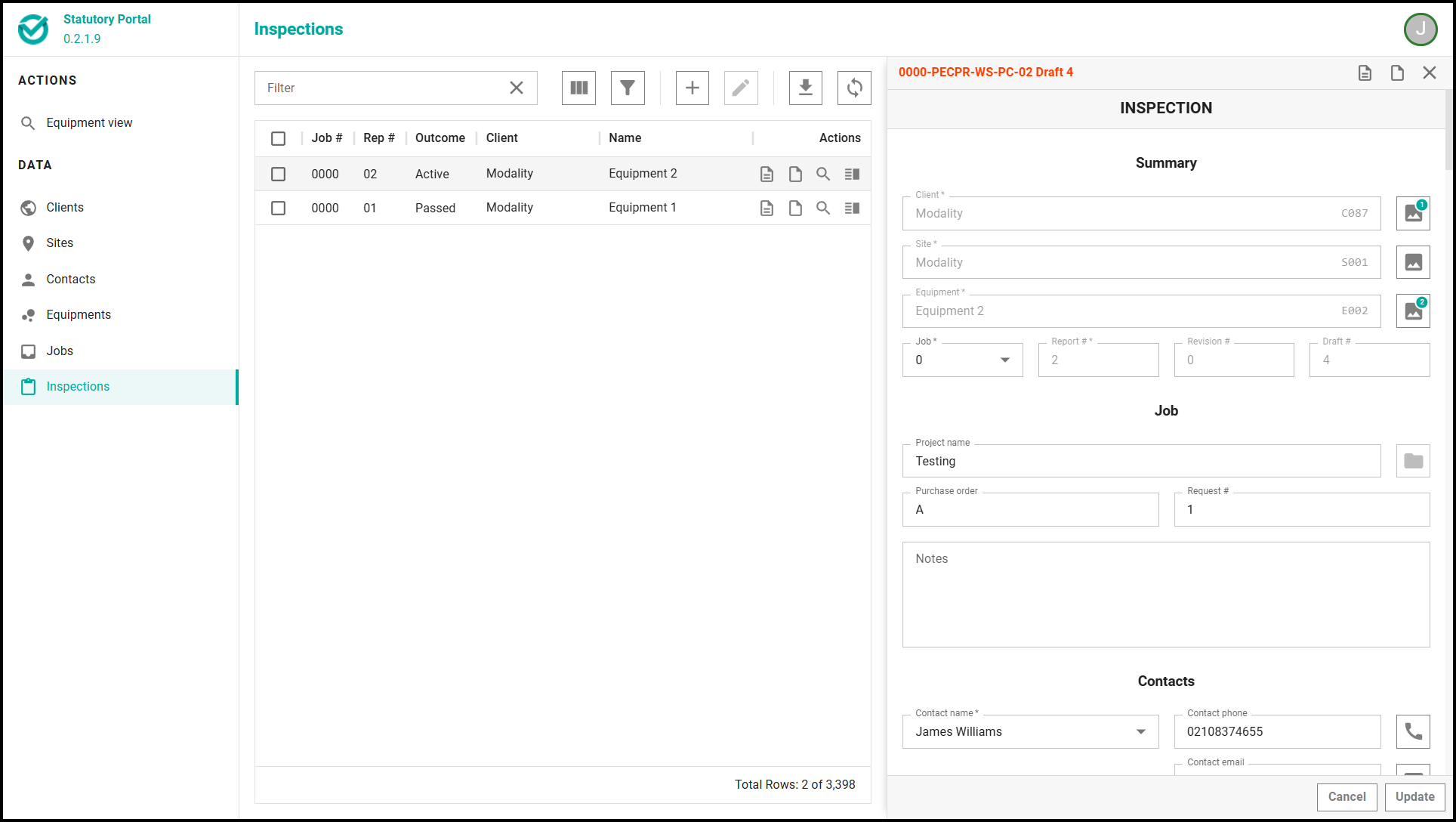
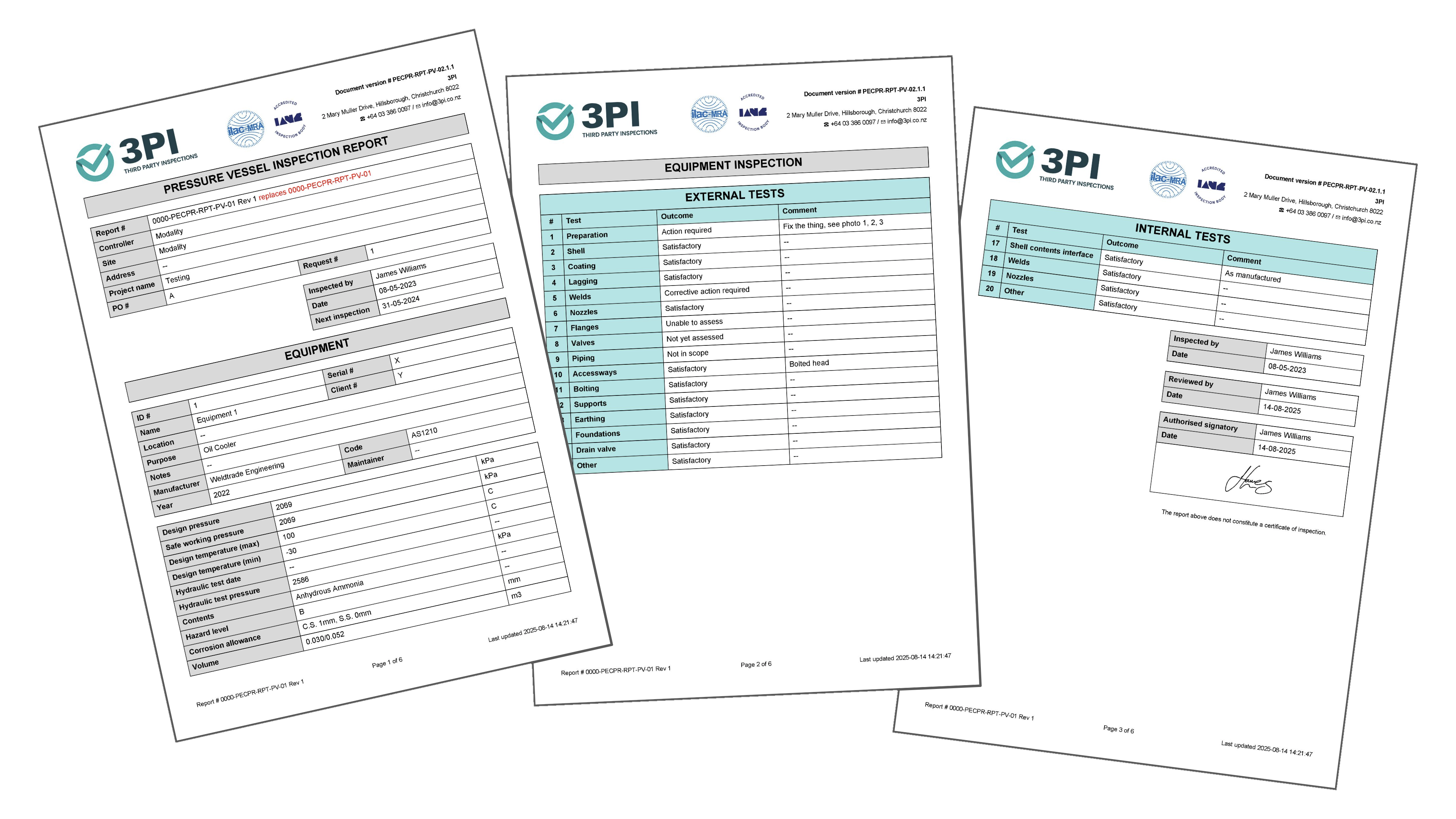
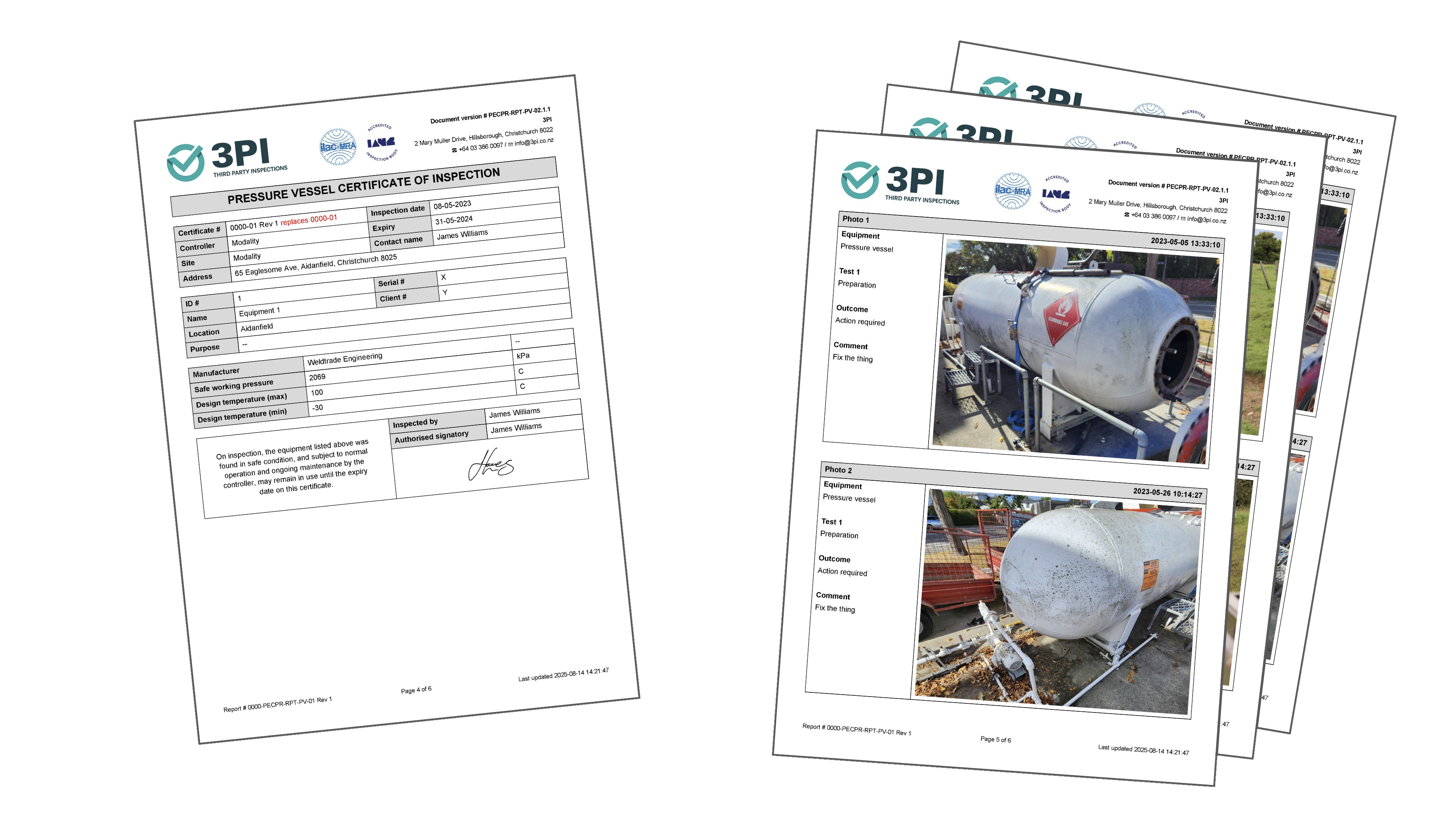
Functional inspection under PECPR Regulations 1999 and AS/NZS ISO/IEC 17020 requires more than completing the tests — it requires a defensible, auditable record of who did what, when, and against which standard. When inspections span multiple inspectors across multiple sites, that record has historically been assembled after the fact: notes reconciled, photos attached, certificates typed up, sign-offs chased by email. Every manual step is a gap in the audit trail.
Outcomes
- Multiple inspectors working the same job simultaneously, in real time across sites and devices
- Digital sign-off and review chain with a full audit trail satisfying PECPR and 17020 requirements
- Certificates generated automatically the moment the final test is signed — no post-processing
- Client portal access to certificates and corrective actions, with resolution tracked in the platform
Tank inspection and certification under API 653
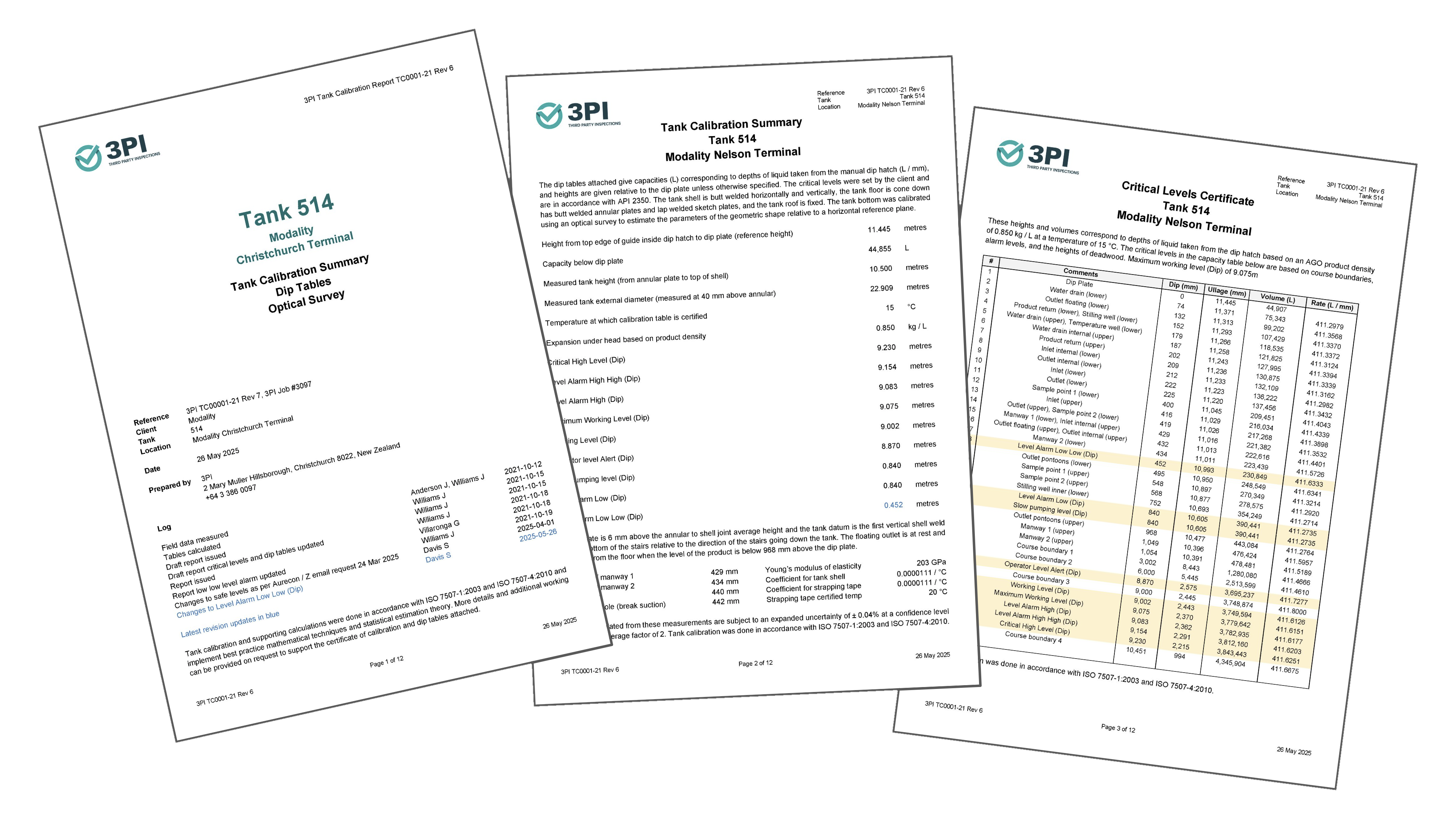
“The certification report now shows every calculation, every input, every standard reference — generated directly from what we captured in the field. Clients get more engineering detail than they’ve ever had, faster than we’ve ever delivered it.”
— Gus Villaronga, Tank Inspector
Challenge
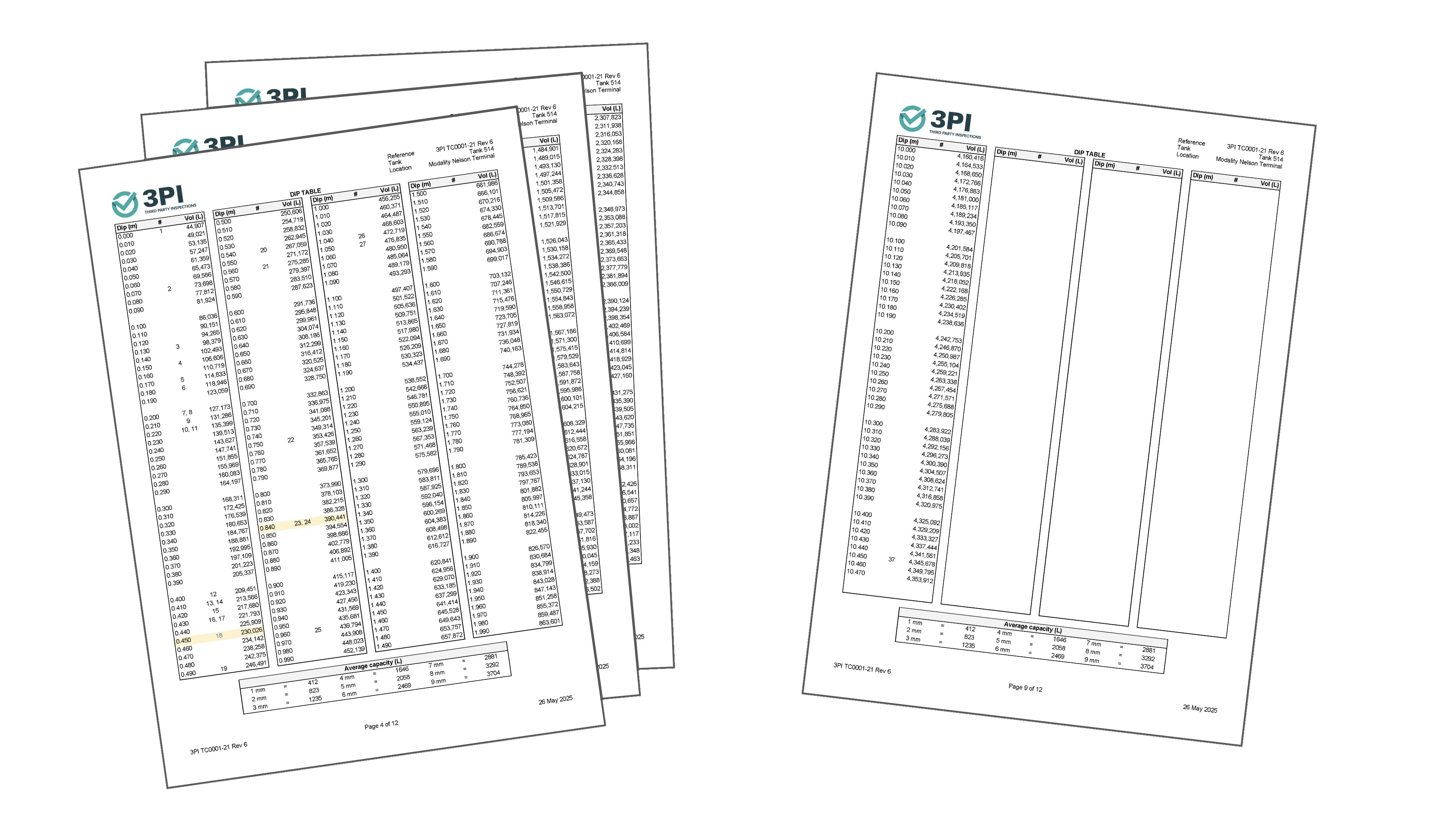
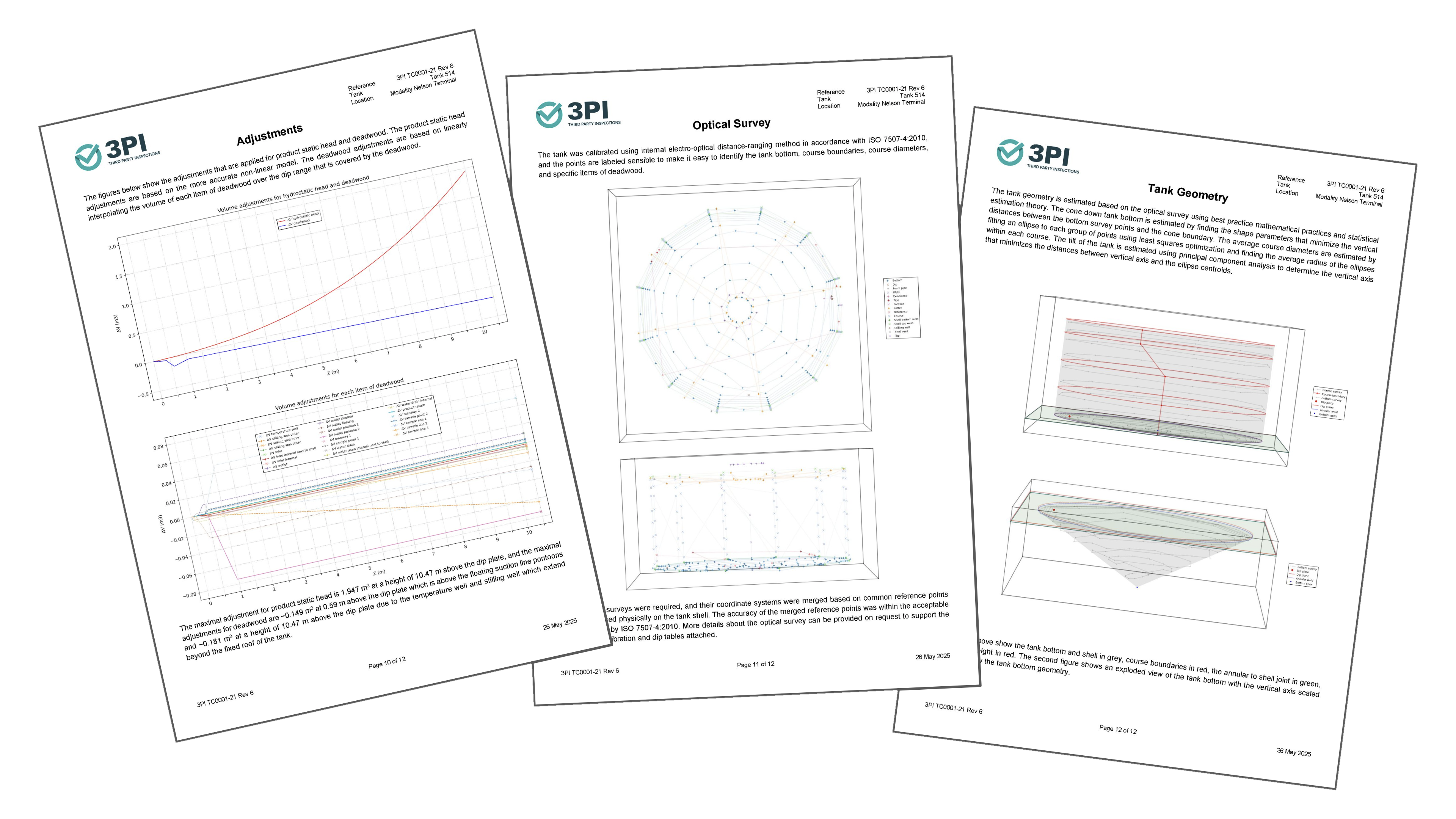
Certifying a stationary tank under API 653 requires more than a field inspection. Volume calibrations, settlement calculations, bottom deformation assessments, and shell corrosion curves each demand their own inputs, their own calculation method, and their own output — and historically, their own tool. Stitching those outputs into a certification report meant manual data transfer, version reconciliation, and a final document that cited calculations assembled in a different application by a different person on a different day.
Outcomes
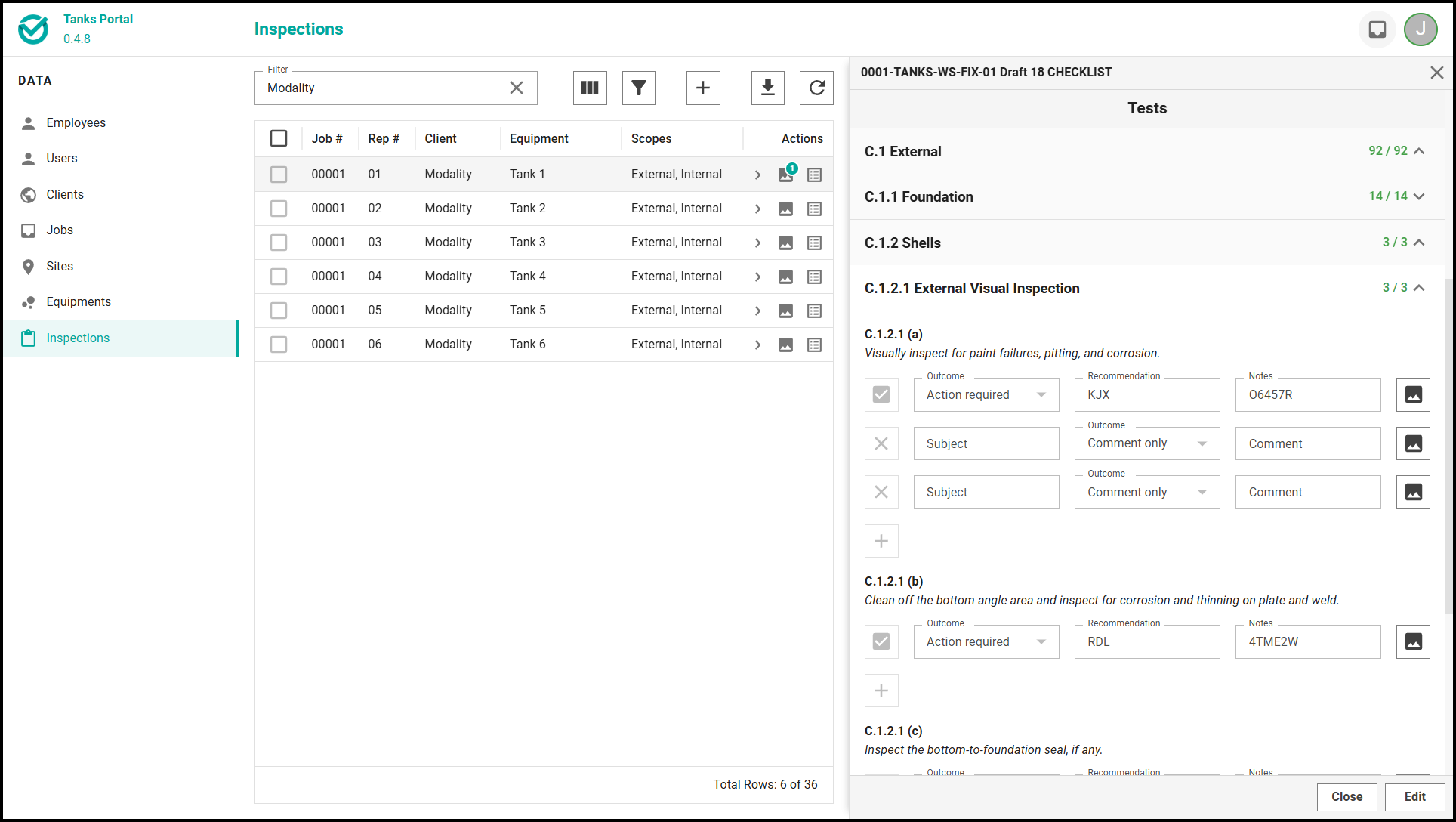
- Full API 653 inspection completed offline inside the tank, with no connectivity required
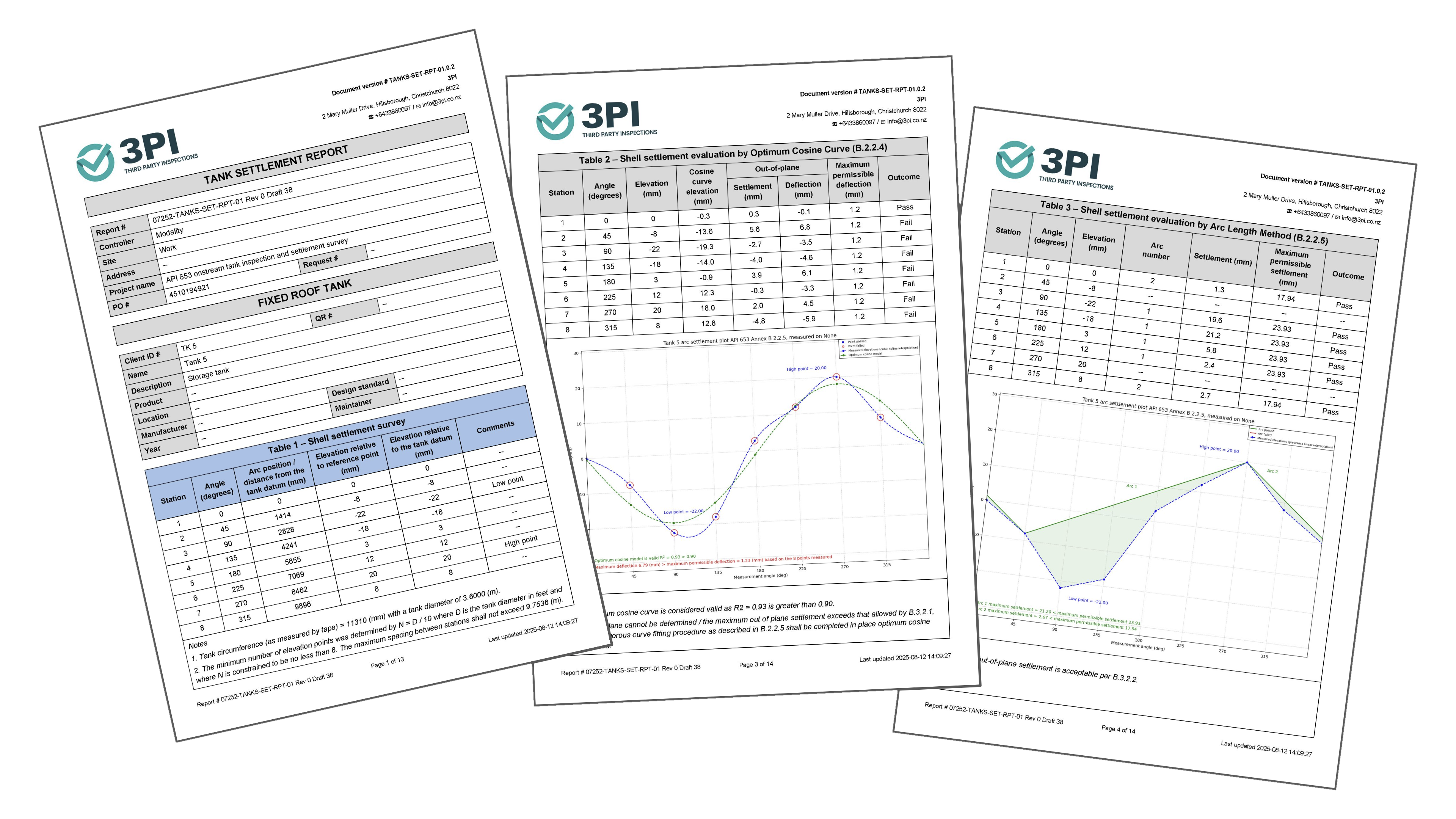
- Volume calibrations per ISO 7507-4, settlement analysis, and shell corrosion curves calculated from inspection data — not from a separate spreadsheet
- Tests automatically filtered by tank attributes — bottom type, roof type, insulation — so inspectors see only what applies
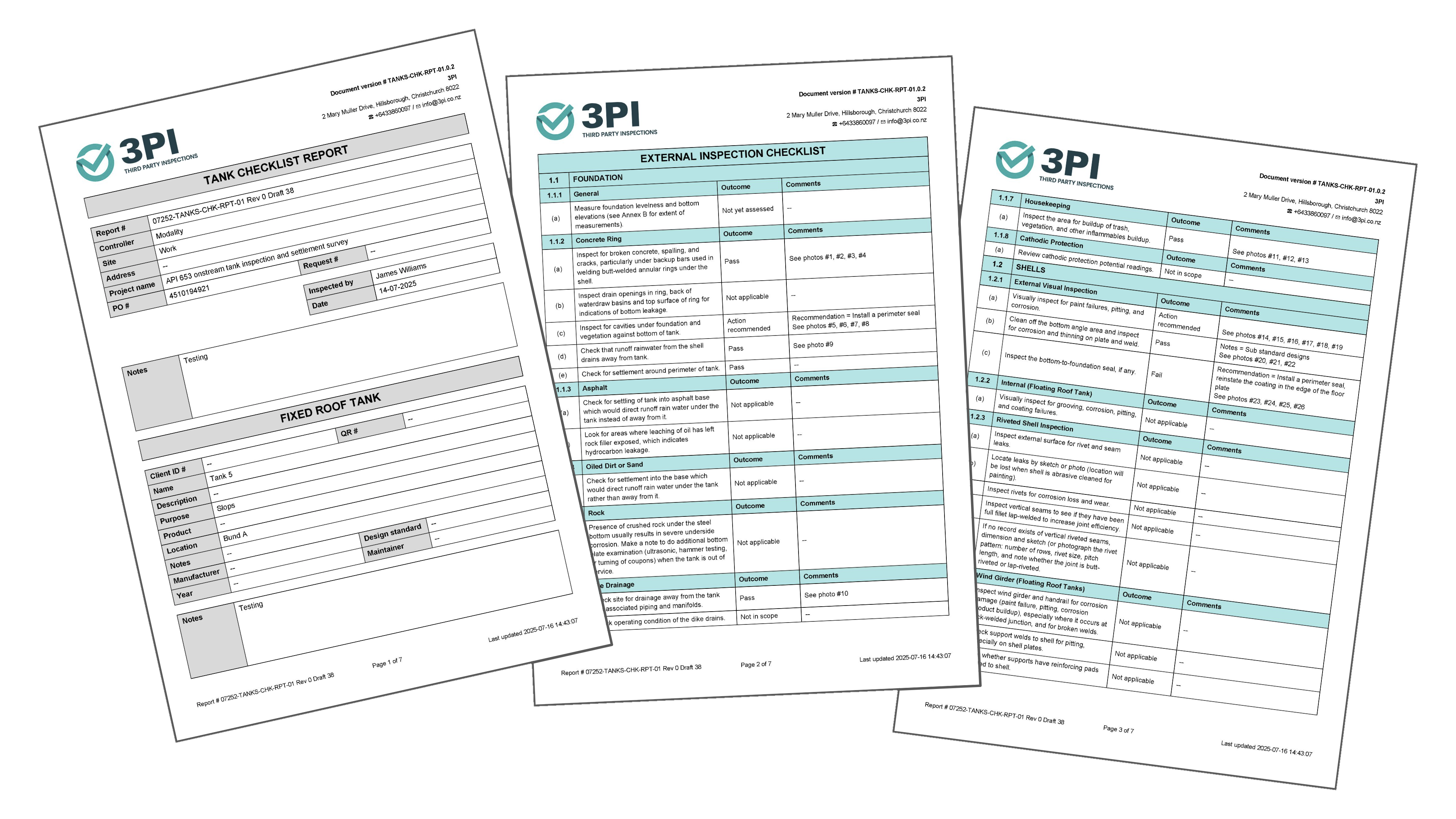
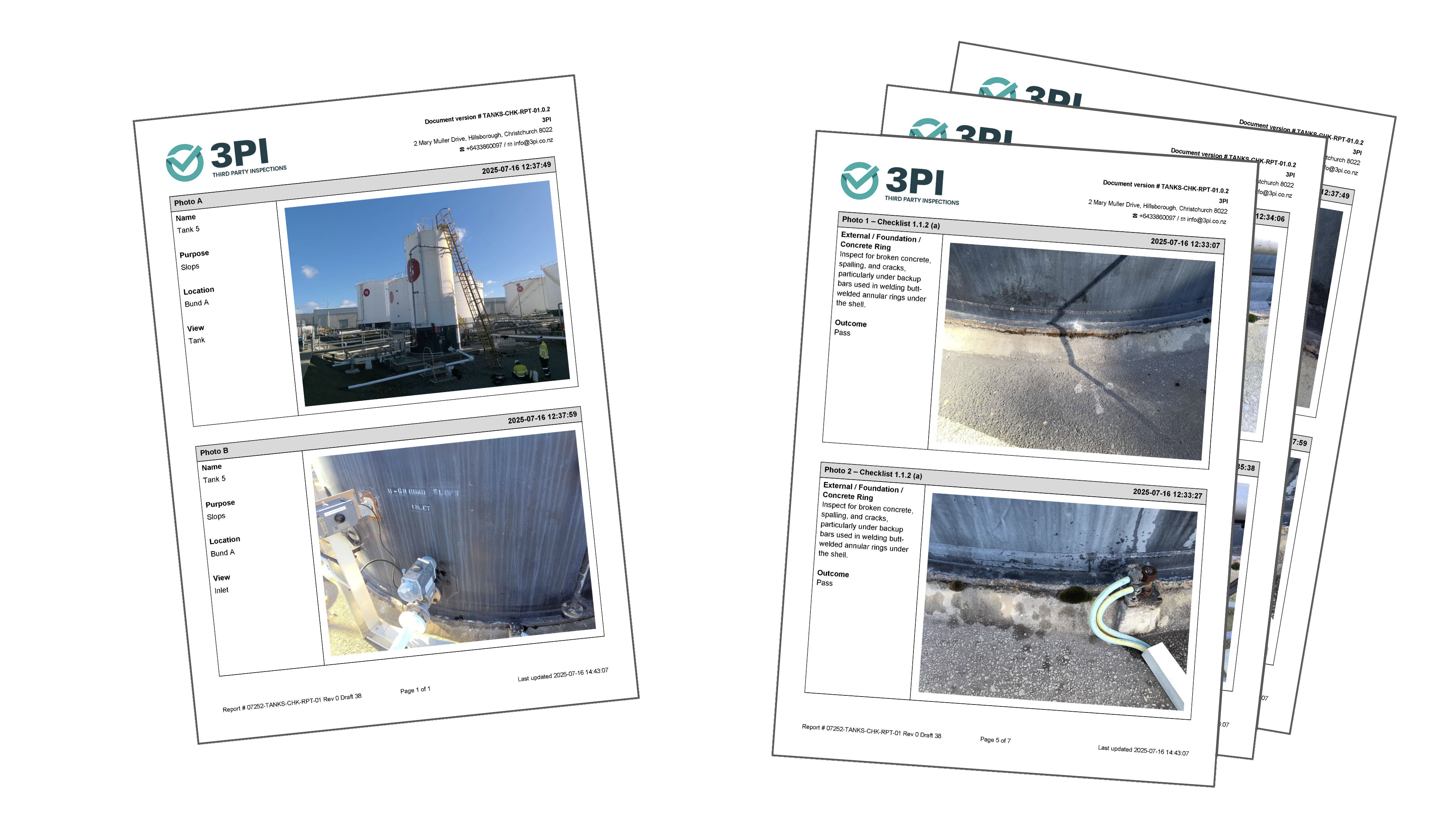
- Certification report generated directly from field data and calculation outputs, with no intermediate formatting step
Visual pipe inspection and mapping
“We have sites with hundreds of lines across multiple equipment trains. Before this, every repeat inspection started with someone redrawing the network. That work is done once now — inspectors update what changed and the report comes out of the data they captured.”
— Gus Villaronga, Owner
Challenge
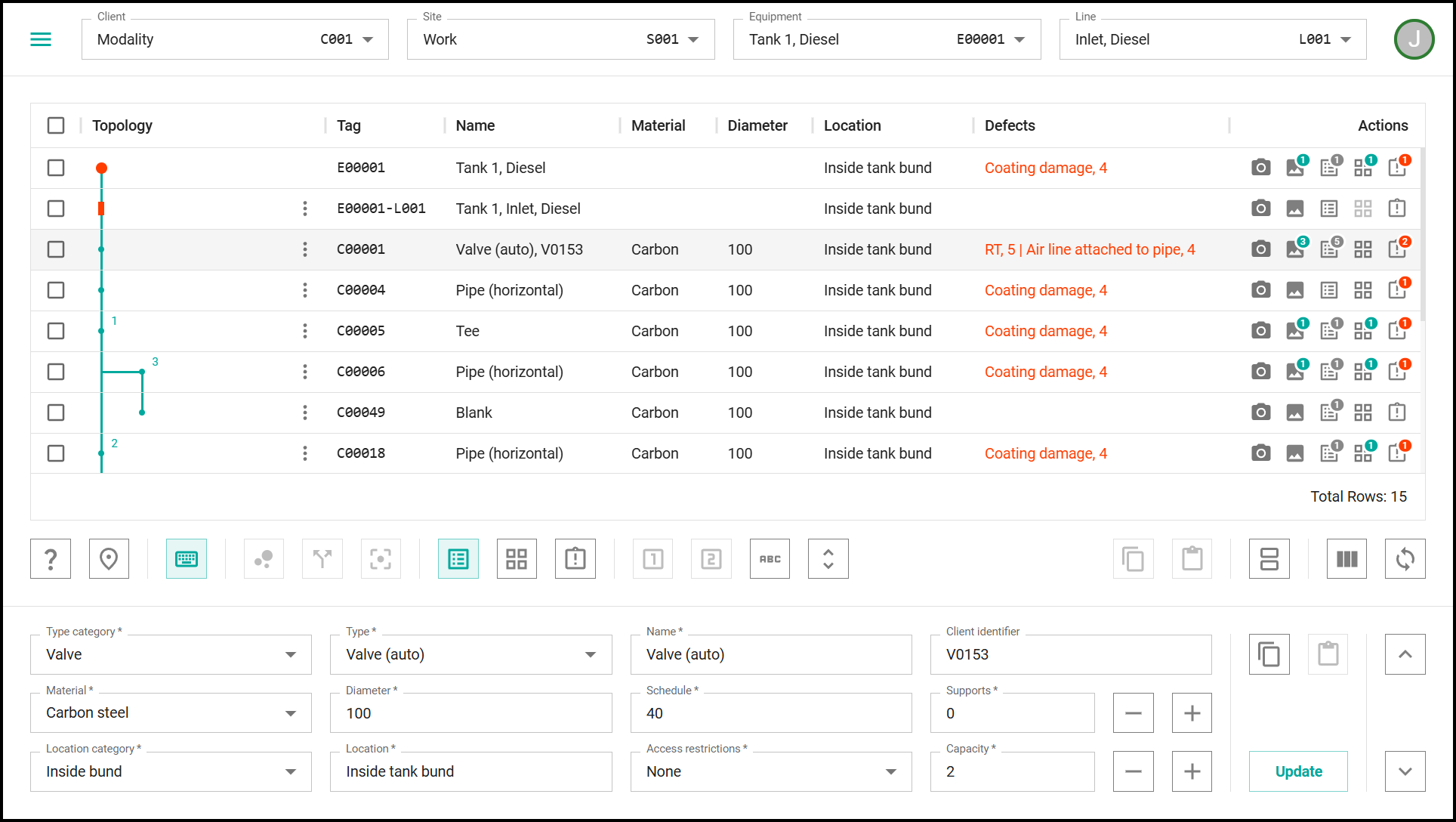
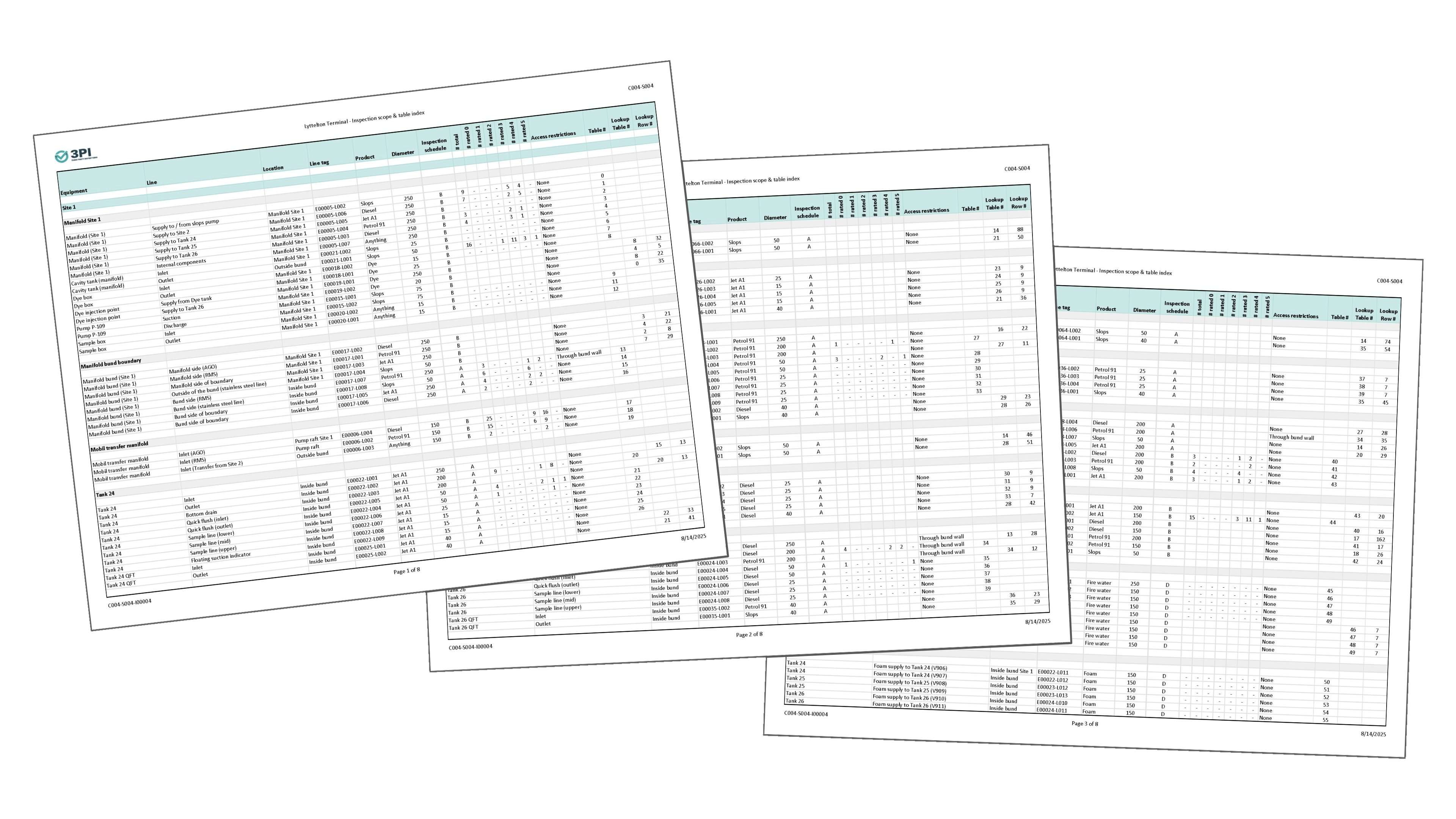
Inspecting branching pipework at scale has no good paper solution. Complex multi-line topologies have to be sketched by hand for every site visit, defects tracked across spreadsheets that live on someone’s desktop, and the full network rebuilt from scratch each time a repeat inspection is due. On intrinsically safe sites — oil and gas storage, offshore platforms, refrigeration plant — none of that can happen digitally without offline capability baked into the tool from the start.
Outcomes
- Non-linear pipe networks mapped once, updated on repeat — not rebuilt from scratch
- Offline-capable on intrinsically safe sites with no connectivity restrictions
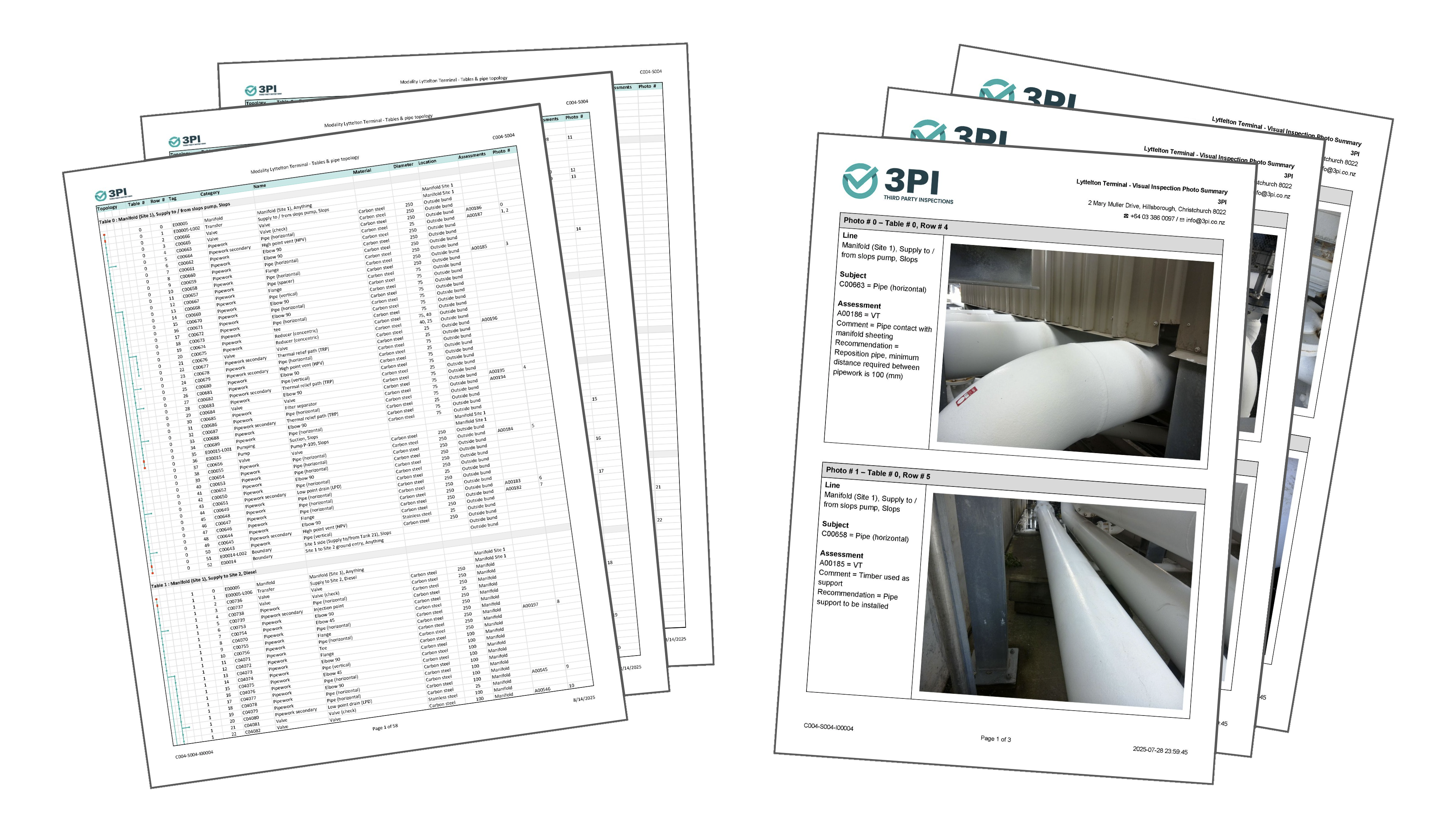
- UT measurements, RT images, and visual assessments captured and linked to the specific component they belong to
- Defects tracked against individual components until resolved, across inspection cycles
- Reports generated directly from field data with linked photos, automatically
Ready to see similar results?
Book a demo tailored to your inspection environment and standards requirements.